
The Evergrande Crisis: Xu Jiayin Investigated for Alleged Offenses - How to Handle Over a Million Uncompleted Properties?
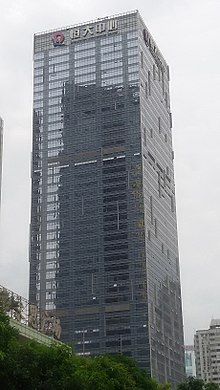
The long-delayed "Evergrande" financial crisis, which has been unfolding for two years, reached a climax on the evening of September 28th. China Evergrande Group, listed in Hong Kong, announced that its Chairman of the Board, Xu Jiayin, is under investigation for alleged illegal activities and has been subjected to legal measures. Several senior executives of Evergrande are also under investigation alongside Xu Jiayin.
This news had been brewing since the 27th of September, and on that day, the stocks of China Evergrande, Evergrande Property, and Evergrande Auto, all subsidiaries of Evergrande, plummeted by 18.99%, 14.49%, and 20%, respectively. By the 28th, these three stocks had already been suspended from trading, and the announcement mentioned that the trading suspension would continue.
In 2020, China gradually tightened its credit policies for the real estate industry, and the following year, many real estate companies with high leverage ratios faced a crisis of liquidity. Evergrande, being the largest among them, had a debt of 2.43 trillion yuan, with a debt-to-asset ratio of 132.6%, rendering it insolvent.
Founded in 1996, Evergrande started in Guangzhou and expanded across the country, diversifying into various sectors such as automotive, finance, culture and tourism, health, and consumer goods. Xu Jiayin became China's richest man in 2017, and Evergrande's market value and sales reached record highs. However, despite initially setting a goal to achieve revenue exceeding 1 trillion yuan by 2020, the company ultimately found itself on the brink of bankruptcy, leaving behind millions of unfinished properties.
Following the Evergrande "default" crisis, several instances of fund misappropriation within the company have come to public attention.
For instance, Evergrande Property's funds of 13.4 billion yuan were redirected by its parent company, China Evergrande.
Moreover, a significant amount of pre-sale payments from Evergrande's real estate projects were not used for construction but diverted to finance new projects, leading to the proliferation of "unfinished properties." According to Chinese regulations, approximately 30% of property pre-sale revenue should be placed under regulatory oversight in a designated account.
Another incident that could potentially implicate Xu Jiayin in "alleged illegal activities" is the fundraising conducted through Evergrande Wealth, which could be seen as illegal fundraising under Chinese law. In fact, problems first arose in this area – Evergrande established Evergrande Finance in 2015, issuing wealth management products, and was a prominent player in the P2P industry at the time. In 2018, when the P2P industry faced a crisis, Evergrande Finance was also affected and had to undergo rectification.
In 2019, Evergrande Finance was renamed Evergrande Wealth, but it did not stop selling wealth management products. Instead, it assigned sales quotas to its employees in a cascading manner. To meet their quotas, Evergrande employees not only bought the company's wealth management products themselves but also encouraged their friends and family to invest. Through this method, Evergrande Wealth raised 40 billion yuan, which was invested in various projects within the group until the "default" in September 2021.
With a staggering debt of 2.4 trillion yuan, Evergrande left a trail of "unfinished properties" across China, along with hundreds of billions of unpaid commercial paper, a significant amount of bonds and loans it could not repay.
Over the next two years, Evergrande has been engaged in a "self-rescue" effort. In March of this year, Evergrande released a preliminary plan for restructuring its overseas debt. Originally, creditor meetings were scheduled for September 25th and 26th in Hong Kong, the Cayman Islands, and the British Virgin Islands, with a second confirmation hearing set for October 3rd to 17th to determine the final restructuring's effectiveness.
However, on September 22nd, Evergrande suddenly announced the postponement of the aforementioned overseas debt restructuring meetings. On September 24th, Evergrande further stated that due to being under investigation, it could not issue new bonds to fulfill the debt restructuring plan announced in March.
Evergrande's "self-rescue" appears to be in jeopardy. At this point, several actions taken by Xu Jiayin have raised questions about asset transfers, including his divorce from his wife, Ding Yumei, and the establishment of a trust fund for his son in the United States.
According to estimates from multiple Chinese media outlets, Evergrande has left approximately 1.62 million unfinished properties, affecting around 6 million property owners, including Guo Tianran.
If Evergrande's top executives are all under investigation, and given the massive debt and the large number of unfinished properties, how will they be handled?
Looking back at previous crises such as HNA Group and Anbang, when the principal leaders of major companies were under investigation, the Chinese government eventually intervened, dispatching working groups to manage asset disposition, overseeing an "orderly closure," or facilitating mergers and acquisitions.
In 2023, even after China lifted COVID-19 prevention measures, the Evergrande properties purchased by Guo Tianran still remained inactive. Later, the government introduced a "guaranteed delivery" policy. Local governments, Evergrande, and property owners engaged in coordination meetings. Guo Tianran shared, "I also attended one such meeting, and there were many of us unlucky property owners. We formed three WeChat groups, each with nearly 500 members, and we referred to them as 'rights protection groups.'"
The final outcome of the coordination was that the first phase would be completed by Evergrande. The second and third phases, including the one Guo Tianran purchased, would be handed over to a local real estate developer to complete construction, with the government allocating some land to compensate this developer.
He mentioned that after Xu Jiayin's arrest, reactions within the rights protection groups appeared complex. Many people applauded and said, "We can't let this bad person escape." However, more people, especially those in the first phase, were very concerned. If Evergrande goes bankrupt and undergoes liquidation, the completion of their housing remains highly uncertain.
"In reality, our second and third phases are not much better off. They claim to have resumed work, but we sent people from our rights protection group to inspect the site, and there were only about five or six workers on such a large construction site. It's all just for show; they are not really working," Guo Tianran said. Many homebuyers have already stopped their loan payments and told the banks they won't pay until construction resumes. If pressured further, they'll sleep in the bank's lobby until they get answers.
Xu Jiayin was born in 1958 and hails from Taikang County, Zhoukou City, Henan Province, China. In 1996, he founded Evergrande Real Estate in Guangzhou.
The establishment of Evergrande came at an opportune time. In 1998, under the pressure of the Asian financial crisis, China maintained the stability of the Renminbi and, as a result, faced reduced exports. The Chinese economy, which had been growing at double-digit rates for several years, suddenly slowed to 8.8%. China urgently needed new engines to stimulate its economy.
At that time, Premier Zhu Rongji, who had recently taken office, put real estate reform on the agenda. In Zhu's view, the best way to boost domestic demand was to activate the real estate market. The real estate industry has a long supply chain and involves various sectors, such as building materials, chemicals, and steel, which would all benefit. Several months later, under the leadership of Zhu Rongji, the State Council officially announced the end of the era of welfare housing allocation and the beginning of the commercialization of residential housing.
Over the next decade or so, the real estate market became the locomotive driving domestic demand in China. However, it also gave rise to issues like "skyrocketing property prices" and "land finance." Secondary problems, such as forced demolitions, also became severe. Nevertheless, the booming real estate market became a crucial driver of the Chinese economy.
During this process, many Chinese real estate companies adopted the "off-plan" selling model (pre-sale system), similar to that used in Hong Kong. They borrowed billions from banks to buy land and, within a few months, opened sales offices and began selling properties, recouping several times their initial investment. Then they reinvested this money to buy more land, took on more debt, and started more projects.
Local governments also profited by selling land and bolstering their finances. Residents who bought homes became property owners and saw their assets appreciate amid rising property prices, seemingly creating a win-win situation.
In particular, in 2016, China initiated a currency-based urban renovation program (shantytown redevelopment), which, in essence, involved demolishing "old, dilapidated, and small" areas in cities, providing cash subsidies to displaced residents, and encouraging them to use this money to purchase new homes.
The introduction of currency-based urban renovation was like stacking firewood, igniting a spark, and then pouring a bucket of fuel. China's real estate market suddenly surged even further.
The Chinese property market witnessed a period of both rising prices and increased volume, and Evergrande capitalized on this trend through aggressive leveraging strategies, benefiting from favorable policy conditions. In a short span, it expanded rapidly, becoming the largest real estate developer in China and catapulting Xu Jiayin to the position of China's richest individual in 2017.
However, around the same time, in the report of the 19th National Congress of the Communist Party of China in October 2017, the phrase "houses are for living in, not for speculation" was first introduced. Subsequently, regulatory measures were gradually tightened, culminating in the "three red lines" policy introduced in 2020.
The concept of "houses are for living in, not for speculation" has since become a contemporary idiom, symbolizing the government's most robust regulatory stance on the property market. Evergrande, once a towering giant, eventually collapsed, with its debt shortfall reaching 644.2 billion yuan in the first half of 2023.